
Article: Why Does One Shearling Coat Cost More Than Another?
Why Does One Shearling Coat Cost More Than Another?
Do you ever think “Why is this shearling coat £800 and that one £8,000?”
Before we talk about the huge difference in cost, we first need to answer a simpler question: what do we actually mean by shearling?
Today, the word shearling is often used in two different ways. Traditionally, it refers to a sheepskin with the wool attached, a natural, whole material.
In modern fashion retail, however, shoppers will also encounter terms such as faux shearling shearling-effect or sometimes simply shearling used to describe synthetic fabrics designed to imitate the look.
The terminology has become blurred and, depending on how these products are presented, it isn't always immediately obvious what the garment is actually made from. This makes it difficult for customers to understand what they're buying - and even harder to understand why prices vary so dramatically.
The description might say shearling, but the composition tells you what you're actually buying.
What Is Genuine Shearling?
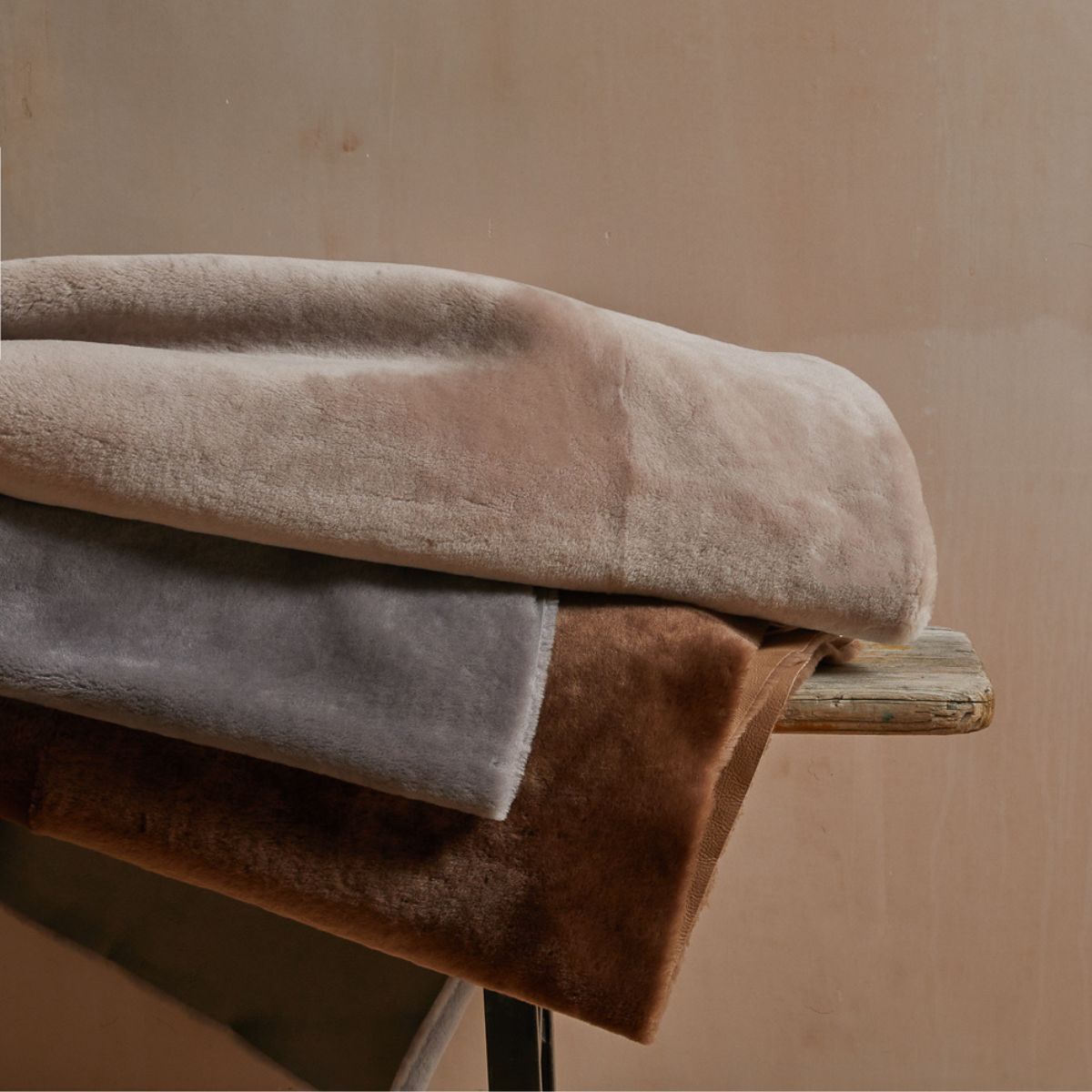
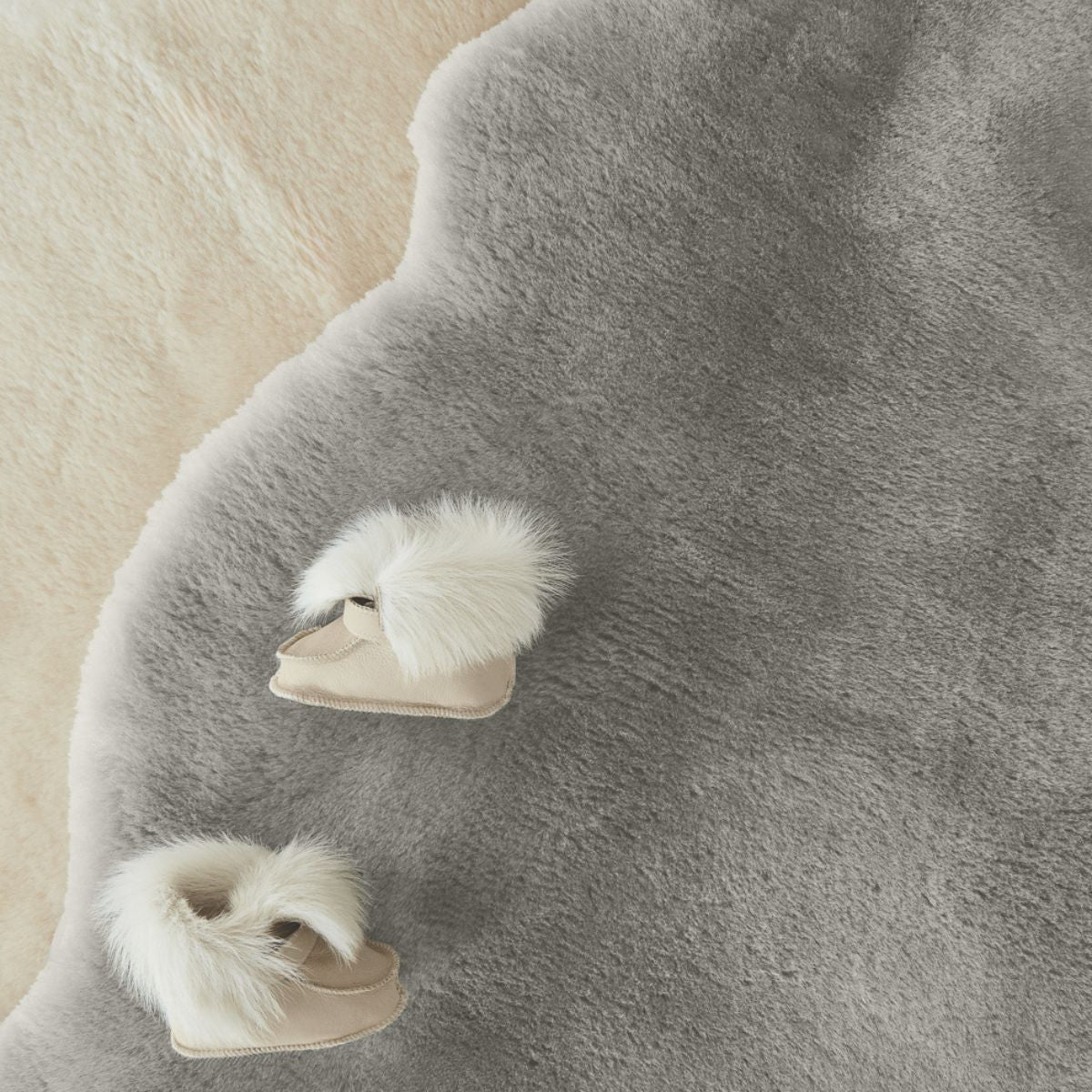
Genuine shearling is a natural lambskin that has been tanned with the wool still attached.
Unlike a coat made from separate layers of leather and lining, shearling is one complete material, a lambskin. The leather forms one side of the garment, while the natural wool remains on the other.
Producing it involves many skilled processes, from the selection and preparation of the raw skin through to tanning, finishing, cutting and construction.
It is naturally breathable, insulating and comfortable to wear. The wool helps regulate warmth, while the skin allows the garment to respond to the body in a way that synthetic materials cannot easily replicate.
Good-quality shearling is therefore considered a precious and luxurious material.
Faux Shearling
By comparison, faux shearling is a man-made imitation, usually made from polyester, acrylic or other synthetic fibres. While it can imitate the appearance of shearling, it does not have the same natural depth, handle or luxurious character of a high-quality shearling/ sheepskin.
Often used in lower-priced and fast-fashion garments, it is less breathable, does not regulate temperature in the same way and is unlikely to age with the character and longevity of genuine shearling. And while sheepskin is a natural material, conventional faux shearling is typically made from fossil-fuel-derived fibres that do not readily biodegrade.
This is the first important distinction when comparing prices: genuine shearling and synthetic shearling are not different grades of the same material. They are fundamentally different materials.
Why Genuine Shearling Coats Do Not All Cost the Same
Even once you have established that a coat is made from genuine sheepskin, there can still be a significant difference in quality and price. Not all sheepskins are equal.
Lower-grade skins may be larger, heavier or irregularly shaped, with ribbing marks similar to stretch marks, scars, loose areas or inconsistencies in the wool. The fleece may feel coarse or sparse, with areas of hair loss. Quality shearling begins with the tannery’s sourcing, grading and processing methods.
The area of the skin used also matters. The outer edges and flanks tend to be looser and less stable than the central sections. A lower-priced coat may make greater use of these areas or combine different grades within the same garment—placing finer, more plush skins around the collar, cuffs and lapels, while using less expensive material through the body.
From the outside, the coat may appear luxurious, but looking inside can reveal a very different standard of material and construction.
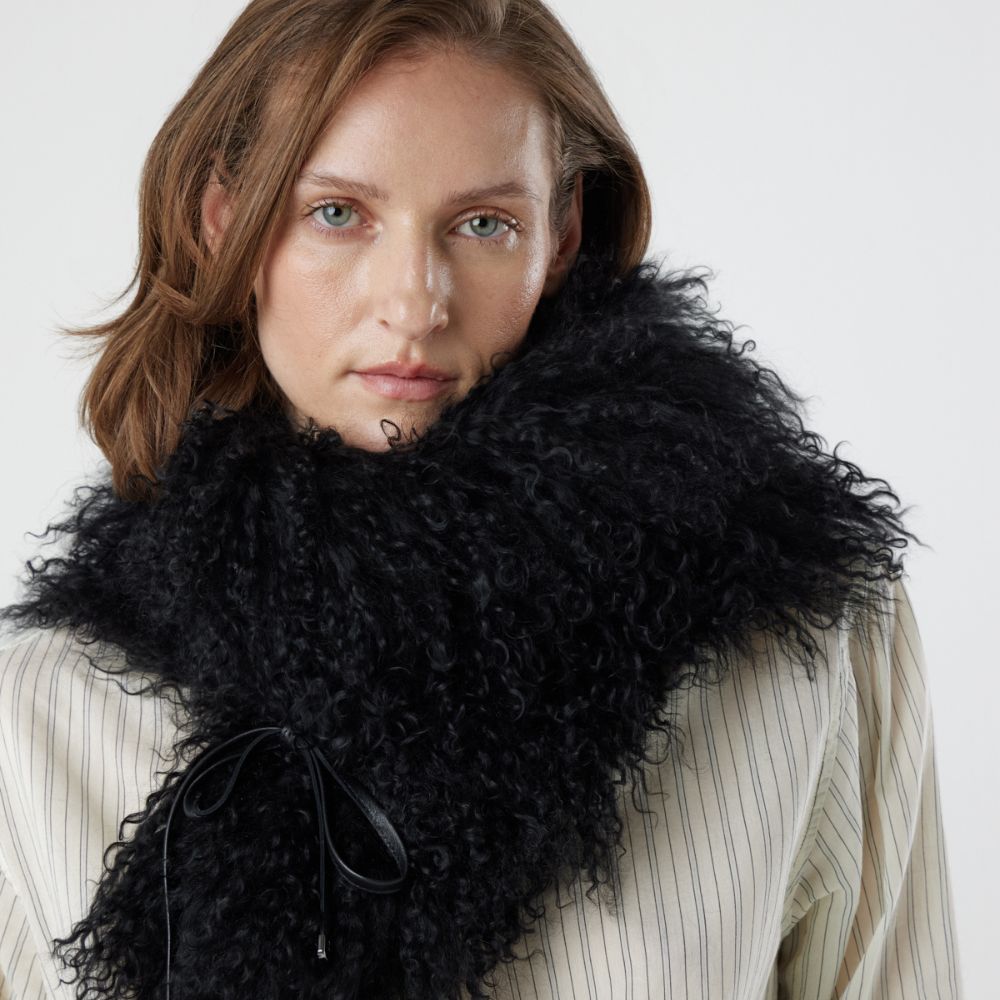
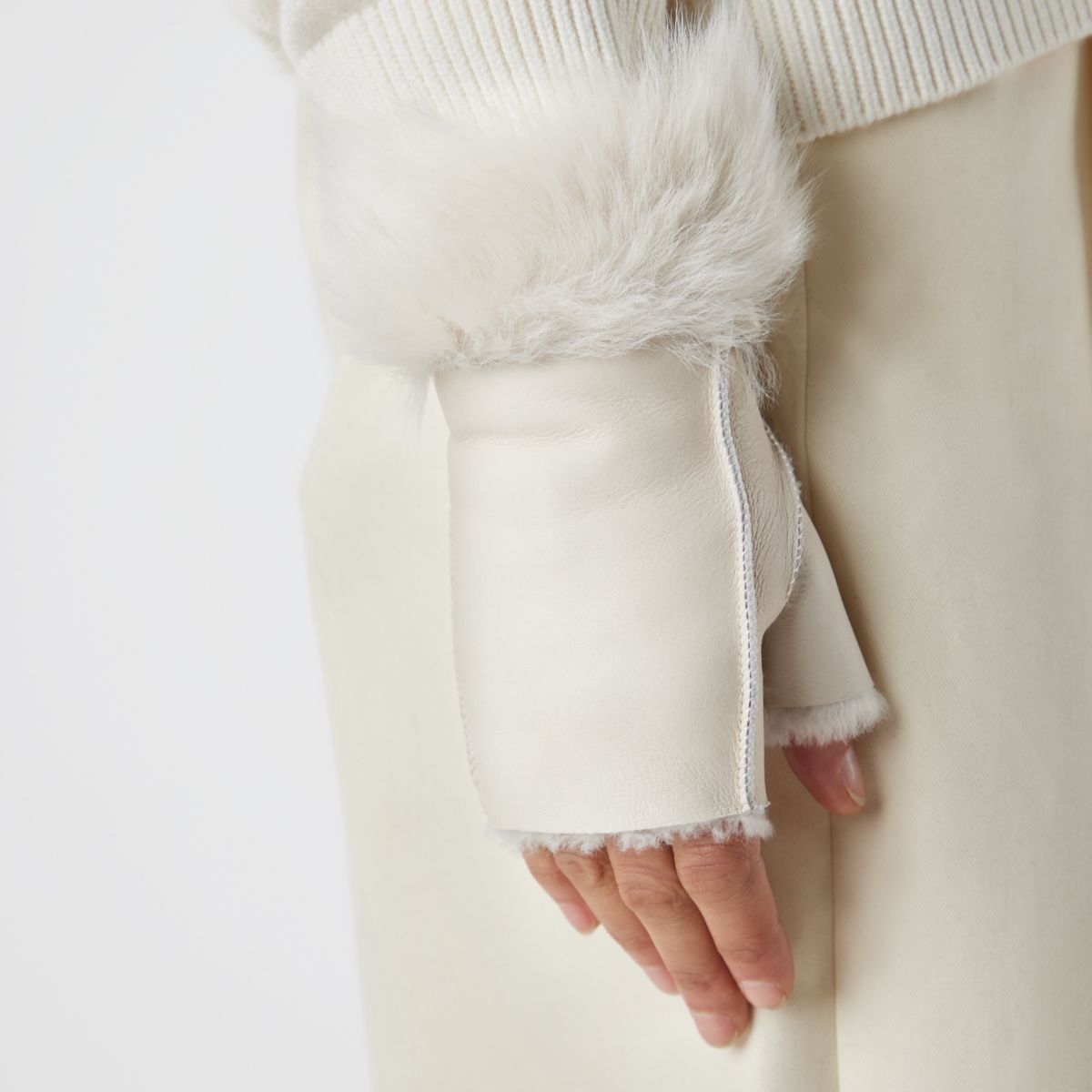
A classic Toscana-trimmed coat is a good example. It may have a beautifully plush long wool collar, cuffs and lapels, while the Toscana used elsewhere has been shorn. This shorn Toscana is generally less expensive. This is because the wool may have been cut/shorn due to its low quality. The finished touch of the shorn wool can often feel coarse and spiky against the body, particularly inside the sleeves.
There are many ways to reduce the cost of a genuine sheepskin coat, but the grade, placement and consistency of the skins are among the most significant.
How the Skin Can Dictate the Design
The quality and size of the skins available can have a direct effect on the design of the finished coat.
When a garment has to be produced to a lower price, the design may become less generous. The collar can become smaller, the body slightly shorter and the overall garment use less material.
Additional seams, yokes, panel lines and breaks can be introduced so that smaller or less consistent areas of skin can be used.
Some joins are technically necessary. Others allow a manufacturer to achieve better utilisation of every skin.
In the best sheepskin garments, the skins are selected to serve the design.
In cheaper production, the design may need to serve the available skins, and ultimately the required price point.
A beautifully proportioned collar, a longer length or an uninterrupted panel may appear very simple, but each can require larger, more consistent and more expensive skins.
Where the Skins Are Sourced and Tanned
The origin of the skin and the location and reputation of the tannery can also affect both quality and cost.
At Gushlow & Cole, we source from specialist tanneries in Spain and Portugal. These regions have a long history of working with sheepskin and are closely connected to the supply of Iberian Merino.
The best tanneries carefully grade and select the skins they purchase. High-grade skins are naturally limited, and the finest examples command the highest prices.
Lower grades can enter other manufacturing markets while still retaining their breed or origin description. A skin might, for example, originate from an Iberian Merino sheep but be tanned and finished elsewhere - Turkey or China for example
The name of the breed alone does not guarantee the quality of the finished material.
For example, two coats can both be described as Iberian Merino, yet the grade of the raw skin, the tanning, finish, weight, softness and quality of the wool can be very different.
This is why it is worth looking beyond the headline description. The tannery, selection and finishing of the material can matter just as much as the breed or origin.
Craftsmanship and Construction
A quality sheepskin coat also depends on the people who make it.
There are highly skilled sheepskin craftspeople in the UK, throughout Europe and worldwide. Geography alone does not determine quality.
What matters is the quality of the material they are given, how the garment has been designed, how the skins are cut and matched, the time allowed for construction and the standard expected of the finished coat.
Sheepskin is not an easy material to work with.
Every skin is different, so a cutter has to consider variations in colour, thickness, wool length, softness and direction. Panels need to be matched so that the exterior looks balanced and the wool inside feels consistent.
Good construction requires judgement.
And this is where the quality of the design and the quality of the craft become inseparable.
Some Coats Begin With a Design. Others Begin With a Price.
Design, development and the cost of getting it right
Genuine shearling is only the starting point.
'Genuine shearling' is a little like 'wine': it tells you what you're buying, but very little about its quality.
Two bottles can be made from the same grape and come from the same region, yet differ enormously in quality and price. The quality of the raw material, the producer's selection, their expertise and what they do with it all contribute to the finished wine.
Shearling is much the same.
Or, more simply expensive ingredients don't necessarily make a good meal. An expensive skin alone doesn't make a beautifully designed coat.
Some coats begin with a design. Others begin with a price.
When price comes first, everything has to work backwards from it: the grade and amount of skin, the length of the coat, the generosity of the collar, the complexity of the pattern and the amount of time spent developing the fit.
Factory-standard patterns can be adapted rather than developing a new shape from scratch. Patterns can be split into more pieces so they fit more economically onto the skins. Lengths can be shortened, collars made smaller and additional seams introduced to maximise material usage.
None of this necessarily makes a bad coat.
It makes a coat designed to achieve a particular price.
When design comes first, the process is reversed.
The designer establishes the silhouette, proportion, length, volume and fit they want to achieve. Only then is the shearling selected — for its weight, handle, wool, finish and character — to achieve that design.
The material serves the design, rather than the design being compromised to maximise the material.
Getting that design right also takes time.
Sometimes very small changes make the difference between a coat that simply fits and one that feels effortless when worn.
Every additional pattern, sample and fitting adds development cost before a single production coat has been sold.
You're paying, in part, for all the versions that weren't good enough.
This is one of the less visible differences between two genuine shearling coats. One may have been selected from an established manufacturer's collection and put relatively quickly into production. Another may have been designed, sampled, fitted and refined specifically to achieve a particular silhouette.
The finished coats may both say 100% shearling on the label.
What went into creating them can be very different.
Sheepskin Expertise Isn't the Same as Fashion Expertise
Who actually designed your coat?
A company may have decades of experience working with sheepskin, but its expertise might lie in rugs, slippers, accessories or other traditional sheepskin products.
That is genuine expertise, but designing a luxury fashion coat requires a different set of skills.
It requires an understanding of silhouette, proportion and fit; specialist garment pattern cutting; an eye for how volume should be distributed around the body; and an understanding of how a particular shearling will behave when made into a particular shape.
A perfectly serviceable sheepskin coat can be produced from an established factory pattern with relatively little fashion development. That keeps costs down.
A specialist fashion coat may go through repeated design, pattern and fitting stages before the shape is approved.
Knowing sheepskin is one skill. Knowing what to do with it on the body is another.
And that expertise is part of what you are paying for.
Not All Sheepskin Costs the Same
The cost of the skin is not just about it's name
Two coats can both be described as genuine Merino shearling and begin with very different raw-material costs.
The breed or origin tells only part of the story.
Skins are graded for quality and consistency, and the finest selections are naturally scarcer and more expensive. A designer can specify a particular weight, wool, finish and colour because those characteristics are integral to the coat being designed.
There is also a more economical way to source.
Manufacturers may buy available stock or lots already held by a tannery. These can be attractively priced for many reasons: excess stock, cancelled orders, discontinued colours and finishes, lower selections or skins that simply fall outside another customer's specification.
Buying this way can make perfect commercial sense. The manufacturer starts with what is available at the right price and develops or selects a product that can be made from it.
A design-led approach starts at the other end.
Instead of asking, “What can we make from this skin?”, the designer asks, “Which skin do we need to make this coat?”
That difference in material selection is reflected in the finished price.
A Good Skin Can Still Be Badly Cut
Cutting: where quality can be kept - or cost can be saved
Once the designer has chosen the skin, responsibility passes to the cutter.
And this is where another significant part of the cost is determined.
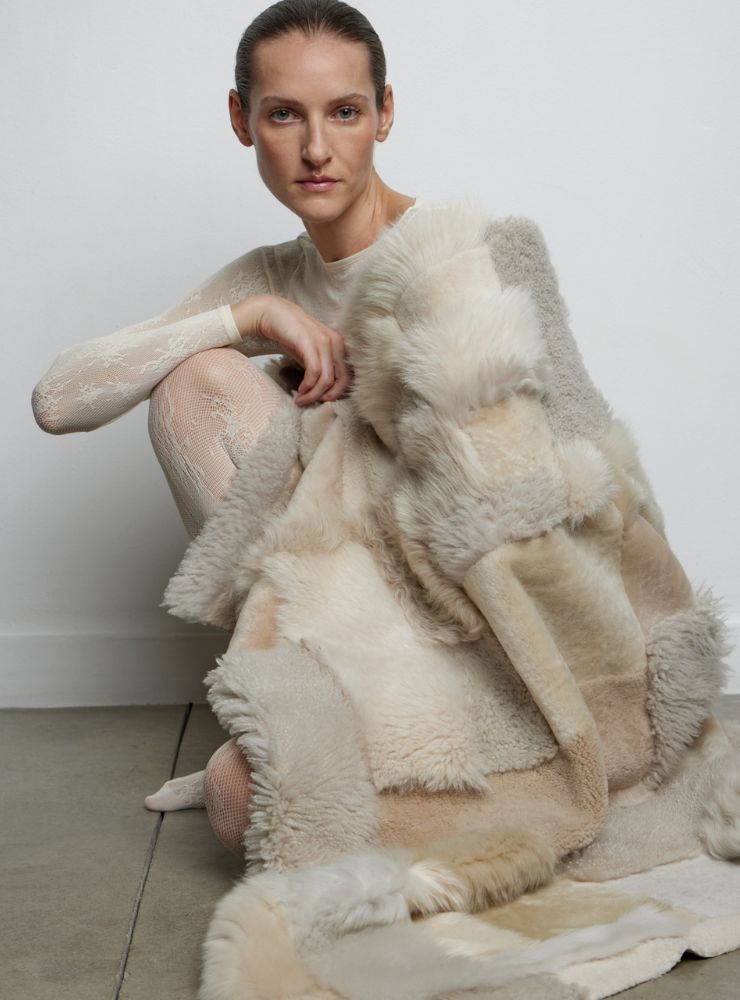
A three-quarter-length shearling coat can require approximately 10–12 individual skins. Those skins need to become one harmonious garment.
The cutter matches colour and wool, selects the best skins for the fronts and decides where different weights and thicknesses should sit. A thicker skin may work through the back but feel bulky in a sleeve.
The natural direction of the wool also has to be respected. A pattern piece shouldn't simply be turned because it fits more economically onto the skin if that leaves the wool running in the wrong direction.
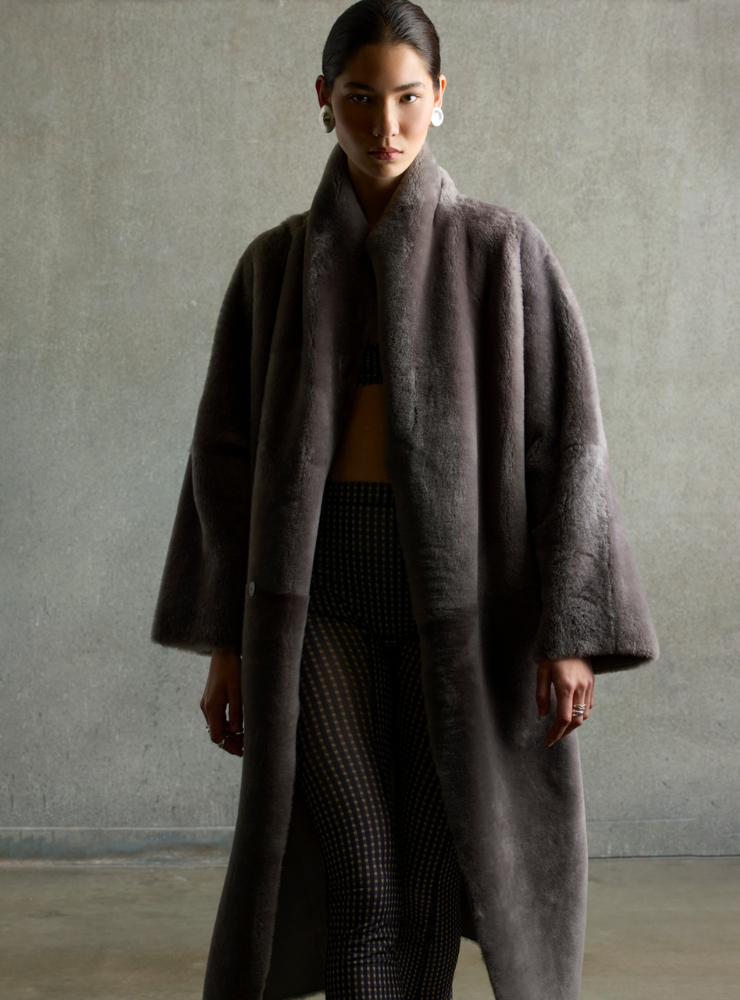
With a reversible coat like the ones designed and made at the Gushlow & Cole workshop, there is nowhere to hide. The suede or leather needs to match on one side, while the colour, density and character of the wool need to work together on the other.
Then comes a decision that directly affects price:
How much of every skin must be used?
The flanks provide valuable additional cutting area, but they can be looser and the wool less consistent. A cutter working to a tight material allowance may need to use more of each skin to achieve the required costing.
Give a highly skilled cutter greater freedom and they can reject areas that don't belong in the finished garment.
But rejecting material costs money.
The more selective the cutting, the more skin you need. The more skin you need, the more expensive the coat becomes.
When it is done properly, the customer shouldn't see ten or twelve different skins.
They should see one coat.
Bigger Runs Cost Less
Scale changes the price
Production volume has an enormous effect on price.
A factory producing hundreds of the same coat becomes extremely efficient. The pattern is established, the cutting has been worked out, the makers repeat the same operations and development costs are spread across a much larger number of garments.
The cost per coat comes down.
There is nothing inherently wrong with this. A large factory can make an excellent garment.
But volume production is necessarily concerned with repeatability, efficiency, material utilisation and achieving the required product at the required price.
Small-scale specialist production like at Gushlow & Cole where we make to order, has different economics.
Original designs are produced in smaller quantities. Patterns and samples may be developed several times. More time can be spent perfecting fit and proportion, while those development costs have to be spread across far fewer finished garments.
Time spent perfecting a coat costs money. So does making fewer of them.
From Factory to Retailer
Who actually develops the product?
There is another reason a genuine sheepskin coat can reach the customer at a surprisingly low price: very little may happen between the manufacturer and the retailer.
Specialist factories can develop their own collections and offer existing styles directly to retailers. A buyer can select a style, choose a colour, perhaps alter a detail and place an order.
It's an efficient business model.
The retailer hasn't had to employ specialist shearling designers, develop the original pattern, produce repeated prototypes or spend months sampling and fitting the coat.
Those costs simply aren't there.
A manufacturer may also combine an existing factory pattern with an attractively priced tannery stock lot and produce it in quantity. The result can be a genuine sheepskin coat at a considerably lower retail price.
Again, lower price doesn't automatically mean poor quality.
It may simply mean you are buying something fundamentally different: a manufacturer's product selected by a retailer rather than a designer's product developed from the beginning.
So, What Are You Actually Paying For?
At the bottom of the market, the differences are relatively easy to understand.
A faux shearling coat is made from an inexpensive synthetic imitation. It doesn't require specialist knowledge of sheepskin to cut and manufacture it and can be produced by a conventional garment factory.
Move into genuine shearling and the picture becomes more complicated.
A lower-priced genuine sheepskin coat may use a lower grade of skin, more economical cutting, established factory patterns and larger production runs. It is still real shearling, but the quality of the raw material, design, fit, cutting and finishing can be very different from a specialist-made coat.
At the other end is high-grade shearling, selected from the best skins and put into the hands of specialist designers, cutters and makers. This is where the difference in quality becomes tangible: in the handle and weight of the skin, the wool, the matching, the cut, the proportion, the fit and the finish.
But then there is another level of price altogether: the luxury designer label.
The world's leading fashion houses can buy the finest shearling and commission some of the best specialist factories. With very few makers left in England, Italy remains an important centre for this kind of luxury manufacturing, and that expertise commands a high price.
But once you are comparing the very best shearling, the difference in the raw material can become surprisingly small.
An £8,000 designer shearling coat does not necessarily contain a skin four times better than one costing £2,000.
At this level, some of what the customer is paying for is no longer the shearling itself. It is the economics of a global luxury brand: its design organisation, marketing, international retail network, wholesale margins, stores, and inevitably, the name sewn into the coat.
This is something we understand from both sides of the cutting table.
Before founding Gushlow & Cole, Emma and I worked at Cole of Kent, making shearling for some of the biggest names in fashion. We saw first-hand the standard of material, cutting and making required at that end of the industry. We know what goes into a coat at that level — and we know what a customer is paying for when the price reaches five figures.
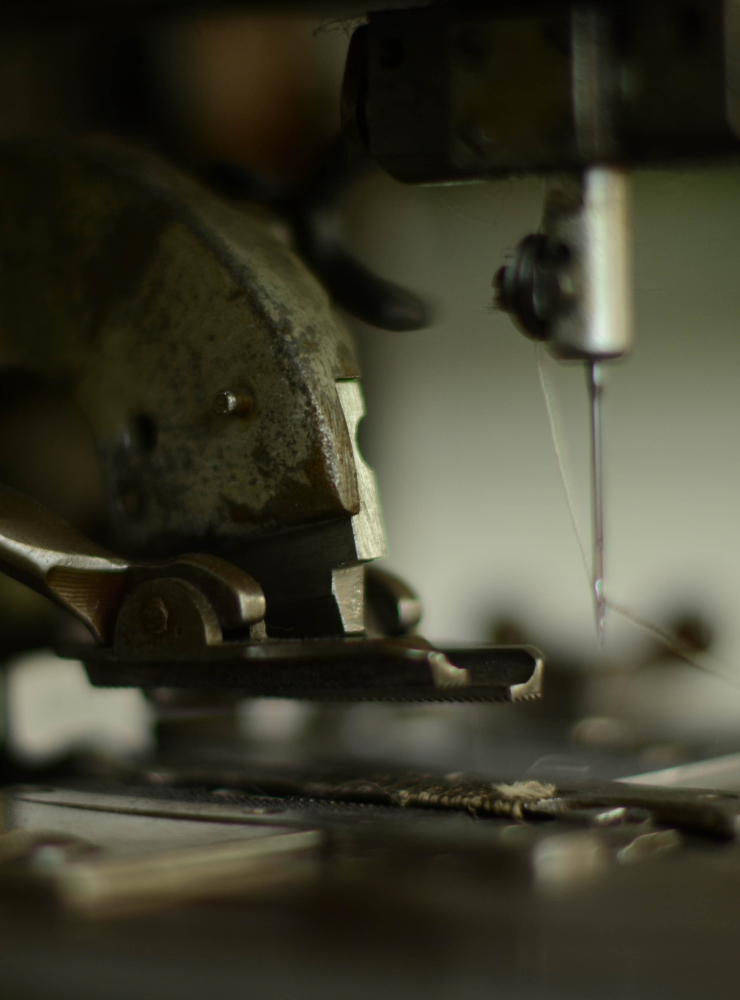
Today, there are very few specialist shearling makers left in England. At Gushlow & Cole, design and manufacture sit together. We source high-grade shearling from specialist tanneries we have worked with for decades. We develop our own patterns, perfect our own fits, and cut and make every piece in our Kent workshop, by hand, in small runs, to a luxury standard we are confident in.
So perhaps there are four questions worth asking when comparing one shearling coat with another:
- Is it faux or genuine?
- If it's genuine, what quality of shearling has been used?
- Who designed, cut and made it, and to what standard?
- And how much of the price belongs to the coat, and how much belongs to the label?
Because at the very top end, a higher price doesn't necessarily mean a proportionately better skin or a better-made coat.
Sometimes you're comparing materials. Sometimes you're comparing craftsmanship. Sometimes you're comparing business models. And sometimes, you're paying for a name.
Our prices reflect genuine shearling, specialist design and skilled British making. They don't reflect a global marketing budget or a Mayfair flagship.
What you're paying for is in the coat.
Interested in finding our more about our make and materials? Read more below.
-
Our guide to responsible shearling
- Find out more about our make
-
Explore the shearling materials we use
-
Shop women’s shearling coats and jackets
-
Why shearling is different from fur